I Made 10 SEO Predictions in 2020. Here Is My Scorecard.
In 2020, I published SEO predictions on the Moz blog. Six years later, I grade myself honestly. What I got right, what I got wrong, and what nobody saw coming.
In May 2020, I published an article on the Moz blog called “What Will It Mean to Do SEO in 2020 and Beyond?” It covered ten predictions about where search was heading.
The original has since been removed from Moz (likely due to age), but a preserved copy lives on the Wayback Machine and I republished it here.
Six years is a long time in SEO. Long enough to know which calls aged like fine wine and which aged like a curry. So I went back through every prediction and graded myself honestly.
7 out of 10 landed. Two were bigger than I imagined. (Oh boy!) One was a spectacular miss.(Cough voice cough search) And the most interesting stuff is what nobody predicted at all.
Here is the scorecard.
1. “Artificial intelligence will continue to evolve”
“Over the past half-decade, artificial intelligence has become a pioneering force in the evolution of SEO. RankBrain and BERT are just early glimpses into how artificial intelligence will dominate SEO in the coming years.”
Verdict: Right, but I massively underestimated the scale.
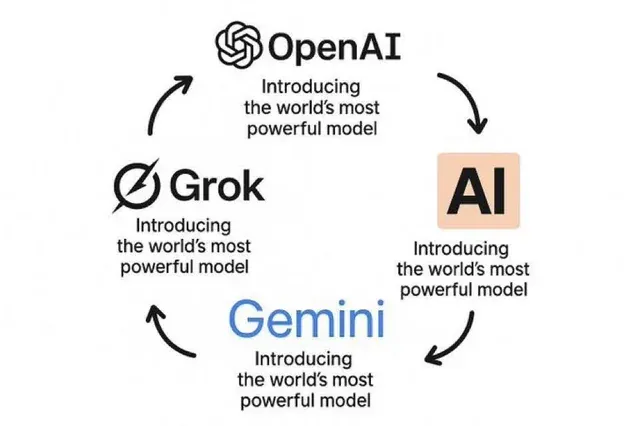
I was talking about BERT and RankBrain. What actually happened: OpenAI launched ChatGPT in November 2022, Anthropic followed with Claude, Google shipped Gemini. BERT itself wasn’t the foundation of modern LLMs, but the title “Artificial intelligence will continue to evolve” turned out to be the understatement of the decade.
AI didn’t just improve how Google ranks pages. It created an entirely new category of search. AI Overviews now appear on 60% of US search results. Google’s AI Mode launched to 180 countries. ChatGPT, Perplexity, and Claude are handling queries that used to go to Google.
We’re not optimising for AI anymore. We’re doing SEO inside AI. I called the direction. I just had no idea how far that direction would go.
Score: 9/10. Right on direction. Wrong on magnitude. Nobody gets full marks for predicting a wave and missing the tsunami.
2. “Voice search is here to stay”
“With smart speakers now numbering 120 million in the US alone, webmasters should be taking the time to investigate where schema can be placed on their website so they can take advantage of the 35.6 million voice search demands taking place every month.”
Verdict: Wrong. This is the big miss.
Google Actions shut down entirely on 13 June 2023. No replacement. Speakable markup is technically still in beta but has been functionally dormant since 2018, never expanding beyond US English on Google Home devices. The entire third-party voice app ecosystem for Google Assistant was killed.
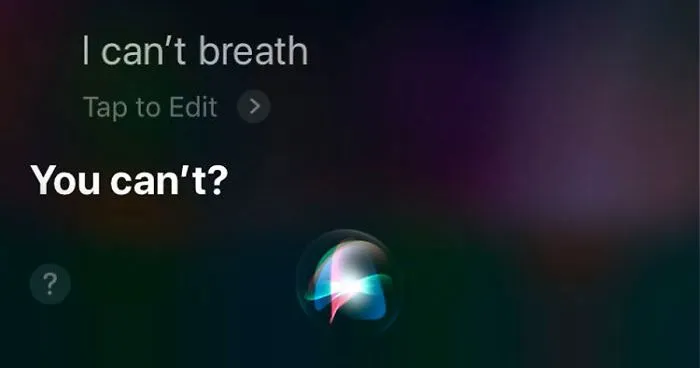
Amazon’s Alexa has reportedly cost them approximately $25 billion in cumulative losses. They gutted the Skills ecosystem from roughly 100,000 down to about 300 when they pivoted to Alexa+. Ford removed Alexa from their vehicles entirely. Apple delayed Siri’s AI rebuild to 2026 and Apple intelligence was a colossal failure.
LLM powered voice assistants have picked up, but not for searching. The use cases that actually grew: audiobook narration (80 to 90% cost savings over human narrators), accessibility tools, education platforms like Duolingo and Khan Academy using voice for pronunciation training, customer service automation, and even NPC dialogue in games. Voice AI shifted from “search by talking” to “content by listening.”
I was all in on voice search. The market wasn’t.
Score: 2/10. The tech exists but the search use case never materialised. Full marks for confidence, zero for accuracy.
3. “Google is heavily invested in using entities”
“Entities place a reduced reliance on links as a ranking factor, and depending on what your SEO strategy is, that could result in the need for big campaign changes.”
Verdict: Right, and it’s bigger than I predicted.
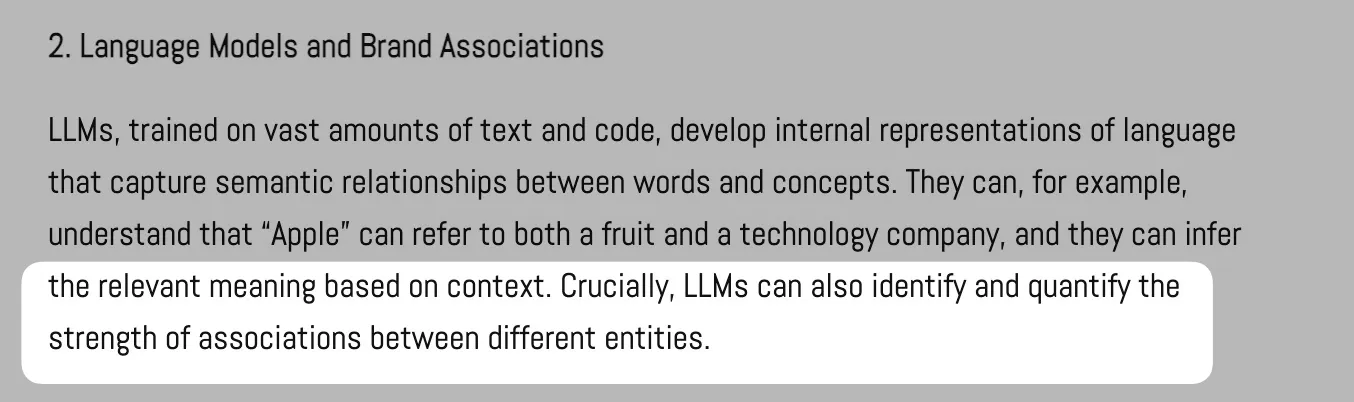
Entities didn’t just become important for Google. They became the foundation of how LLMs understand brands entirely.
Dan Petrovic at DEJAN built what he calls “Language Model Association Networks,” using bidirectional prompting to map how AI models connect brands with entities. His research shows that frequency of LLM mentions correlates directly with brand authority. He’s pushing “Selection Rate Optimisation” as the replacement for CTR optimisation in AI search.
My prediction about “reduced reliance on links as a ranking factor” is playing out. Entity recognition and topical authority are increasingly what determines visibility, especially in AI search where there are no links to count.
Score: 9/10. Called the direction and the mechanism. The AI search angle makes it even more relevant than I expected.
4. “The knowledge panel will be important for personalities and brands”
“Being in the Knowledge Graph can improve trust and add authenticity to your business or personal brand, as well as providing additional visibility.”
Verdict: Right.
This ties directly to entities. I finally got my own Knowledge Panel after years of building brand mentions, authority signals, and entity consistency. It took a long time, but once it appeared, the impact on credibility was immediate.
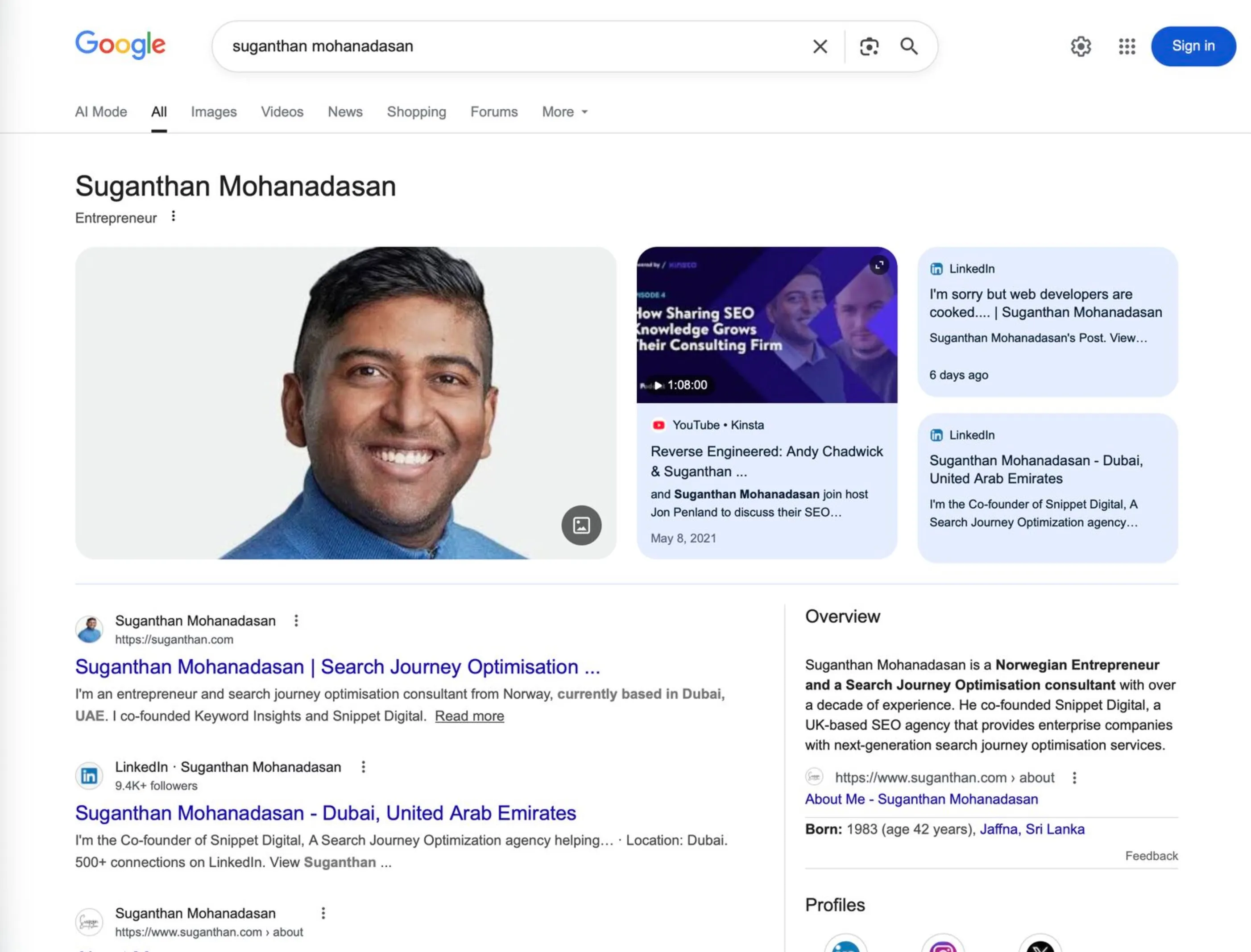
The importance has only grown. Knowledge Panels now feed directly into how AI models understand and cite brands. Claiming your panel isn’t just about the SERP anymore. It’s about establishing your entity in the knowledge graph that LLMs draw from. If Google doesn’t recognise you as an entity, AI search won’t either.
Score: 8/10. Straightforward prediction, straightforward result. No bonus points for difficulty.
5. “Queryless proactive predictive search is getting better”
“Google Discover was released in June of 2017, prompting a new kind of search altogether — one that is queryless. Discover claims 80 million active users.”
Verdict: Right, massively.
Google Discover now has 800 million monthly active users. Ten times what it had when I wrote the post.
The numbers are staggering. Discover now accounts for 68% of all Google referral traffic to publishers, up from 37% in 2023. Traditional search dropped from 51% to 27% over the same period. It is now the single largest referral source for many news publishers. Average CTR: 11%.
Google even ran its first ever standalone Discover core update in February 2026, confirming just how seriously they take the platform.
The platform I flagged as “worth your consideration” became the dominant traffic channel for publishers. The content breakdown: 46% news, 44% e-commerce, 7% entertainment, 2% travel.
Best yet, Google discover is coming to Desktop as explained by John shehata during his talk at VisiSummit in Dubai. (Follow him, he knows what he is talking about and has built a tool for Google Discover)
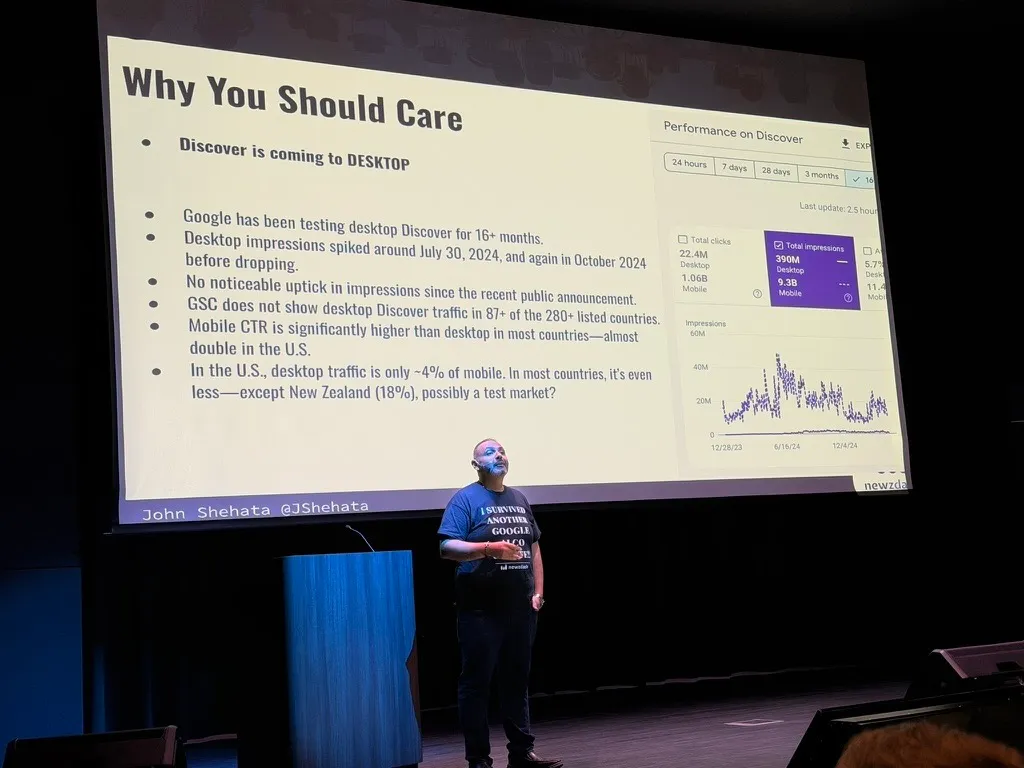
Score: 9/10. Called it early, called it right. The 10x growth from 80M to 800M users is the kind of thing that makes you look prophetic in hindsight, but I’ll be honest: I didn’t expect that scale either.
6. “We have yet to see the biggest changes in visual image search”
“While speaking at a Webmaster Meetup, John Mueller shared that there will be major changes in image search in the coming year. Very soon people will use it to accomplish goals, purchase products, and learn new information.”
Verdict: Right.
Google Lens now processes 20 billion visual searches per month, doubled from 10 billion in early 2023. Three billion active users. Usage increased 4x since 2021.
The milestones since 2020: Google launched Multisearch in 2022 (combine image + text queries; photograph red shoes, type “blue” to find the blue version). In 2024, Circle to Search launched on Pixel and Samsung devices, letting you circle anything on screen to trigger a search. “Search your screen” extended Lens across any Android app.

Gen Z and Millennials now start 40% of product searches visually. Mueller’s prediction that people would use image search to “accomplish goals and purchase products” came true. Visual search went from a novelty to a core search behaviour, particularly for younger demographics.
Score: 8/10. The prediction landed. The specific mechanisms (Lens, Multisearch, Circle to Search) went further than anyone expected.
7. “E-A-T doesn’t apply to every site, but it still matters”
“Google is taking big steps to ensure that low quality or questionable YMYL content is weeded out.”
Verdict: Complicated. The concept was right. The execution betrayed everyone.
Google added the extra E (Experience) to make it E-E-A-T. They talked a big game about rewarding expertise. Then their own quality updates devastated the very sites that had genuine expertise.

Glenn Gabe tracked 400+ sites hit by the September 2023 Helpful Content Update. Zero recovered. By August 2024, only 22% saw any lift, and most of those surges were temporary. The December 2025 core update continued the pattern: sites ranking top 3 for years dropped to page 2 overnight. Reports of 98% Discover traffic drops. Ten year old domains losing everything.
Danny Sullivan acknowledged the problem. Barry Schwartz noted Google never actually promised affected sites would recover.
E-E-A-T as a concept is sound. E-E-A-T as a protective shield turned out to be a myth. Having genuine expertise didn’t save sites from the HCU or subsequent core updates. The updates operate on different signals (helpfulness classifiers, intent matching) that don’t map cleanly onto E-A-T as practitioners understood it.
Score: 5/10. Half right. The concept matters. The promise that quality would be rewarded? That part didn’t survive contact with reality.
8. “Topics and semantics over keywords”
“Google is putting less priority on both links and keywords, which is where topic modeling and semantics come into the conversation. By clustering your topics into compartments through your website architecture, both users and crawlers can easily navigate and understand the content provided.”
Verdict: Right.
Topic clustering is now standard practice. I didn’t just predict this one; I co-founded Keyword Insights specifically to solve the clustering problem at scale. The platform uses SERP overlap analysis to group keywords by topic, identify search intent, and generate content briefs. It exists because this prediction turned out to be correct and the existing tools weren’t solving it.
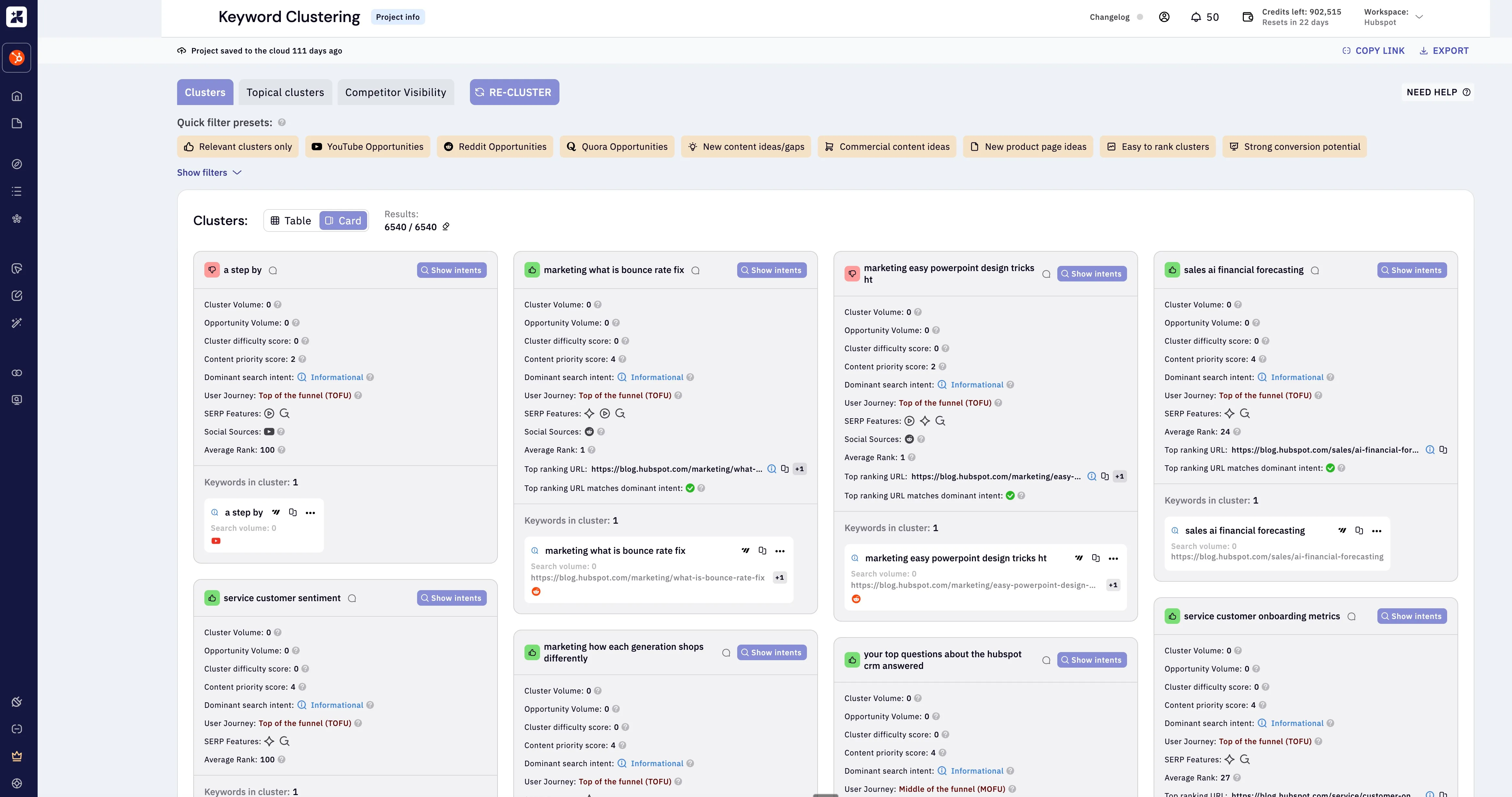
Topical authority building became a mainstream SEO strategy. Google’s topic layer, semantic understanding, and entity recognition all progressed exactly as predicted. The industry moved from targeting individual keywords to building comprehensive topic coverage. The sites winning in AI search are the ones with deep, well-structured topical coverage, not the ones with the most links to a single page.
Score: 9/10. Called it, then built a SaaS company around it. That’s conviction.
9. “SERPs will continue to evolve”
“In some cases, being placed first within the organic search results may not be the most lucrative position. With the introduction of Voice Search, rich results, knowledge panels, Google My Business, and updated Image Search results, SEOs now need to consider a whole new range of technical marketing strategies.”
Verdict: Right, and then some.
AI Overviews now sit above everything. CTR for top ranking pages dropped 34.5% for queries with AI Overviews. Organic CTR collapsed from 1.76% to 0.61% according to Seer Interactive. Small publishers are losing 60% of Google referral traffic in the AI era.
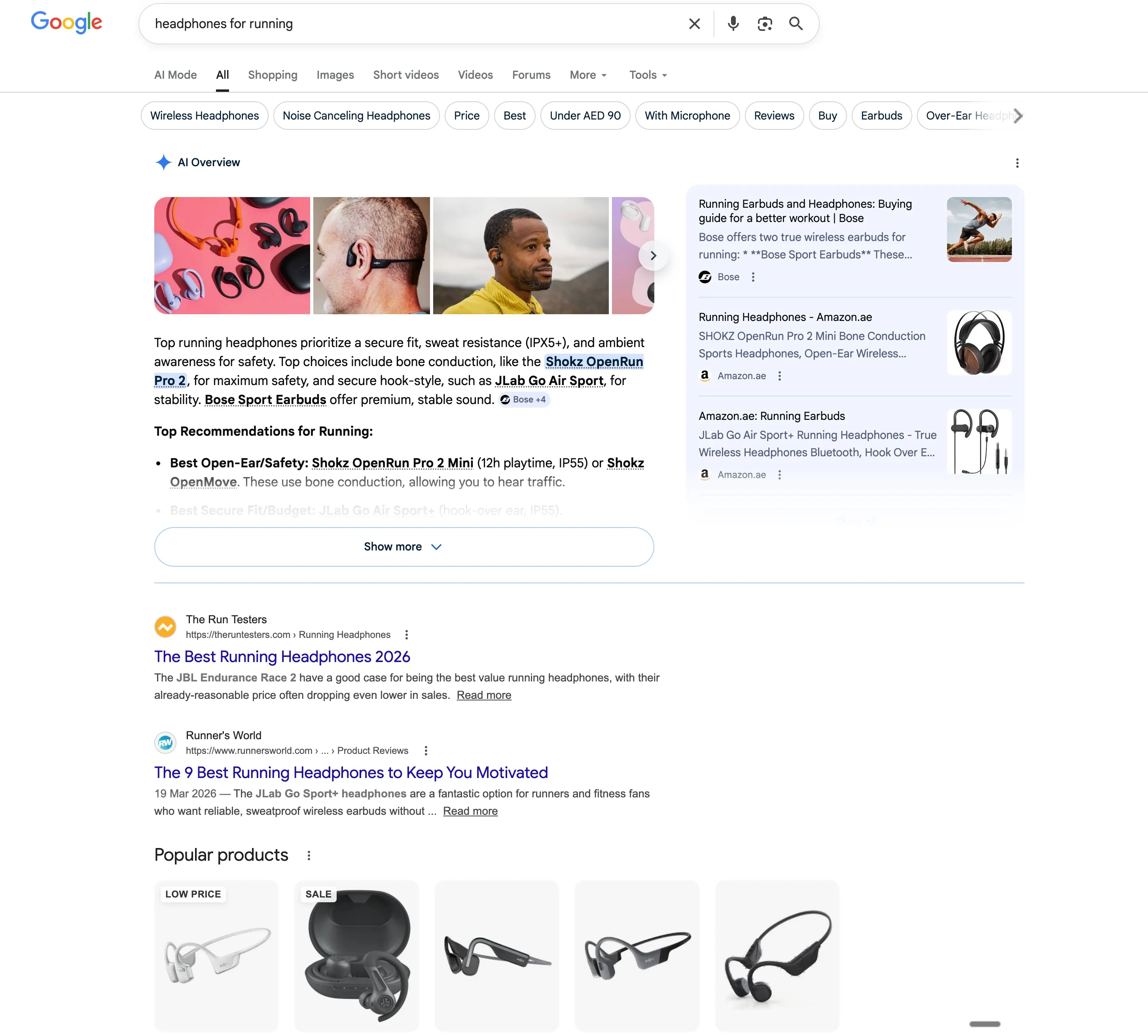
Google AI Mode is now prominent within the search.
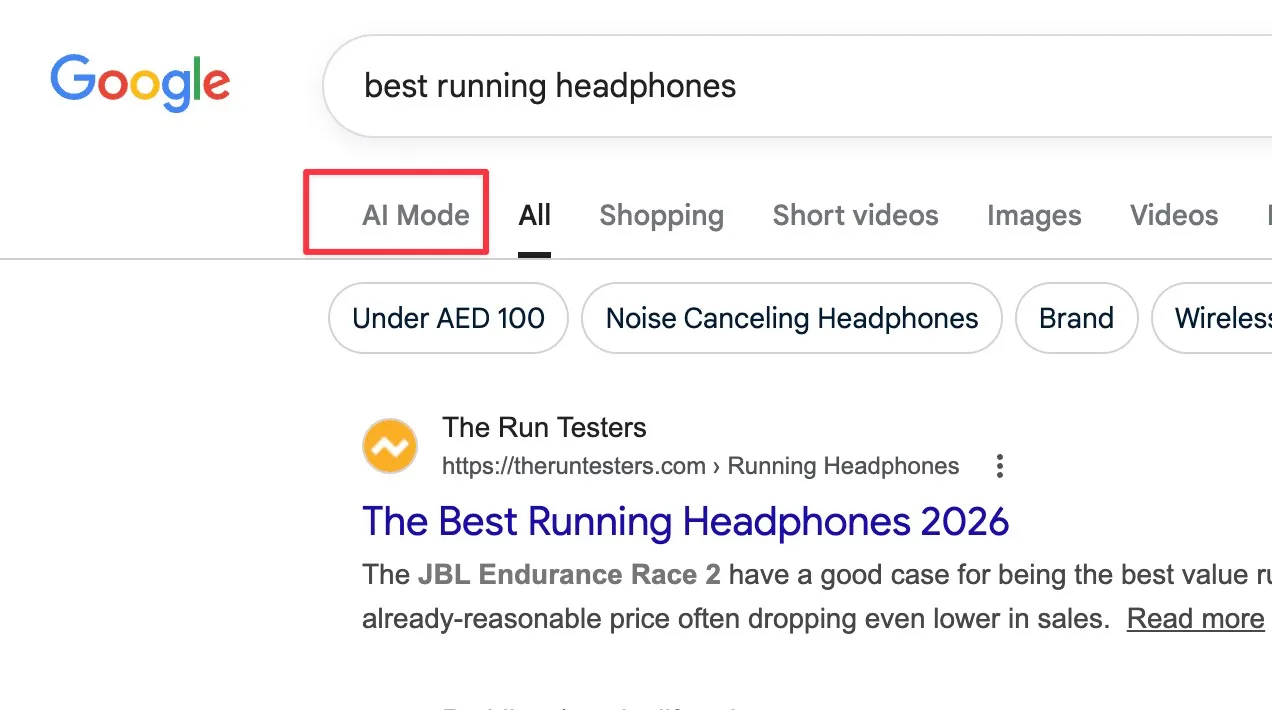
We know there is a real possibility of AI Mode becoming the default search option.
I’m sure you’ve seen this slip-up by the Google engineer (Ok they backtracked on this later lol)
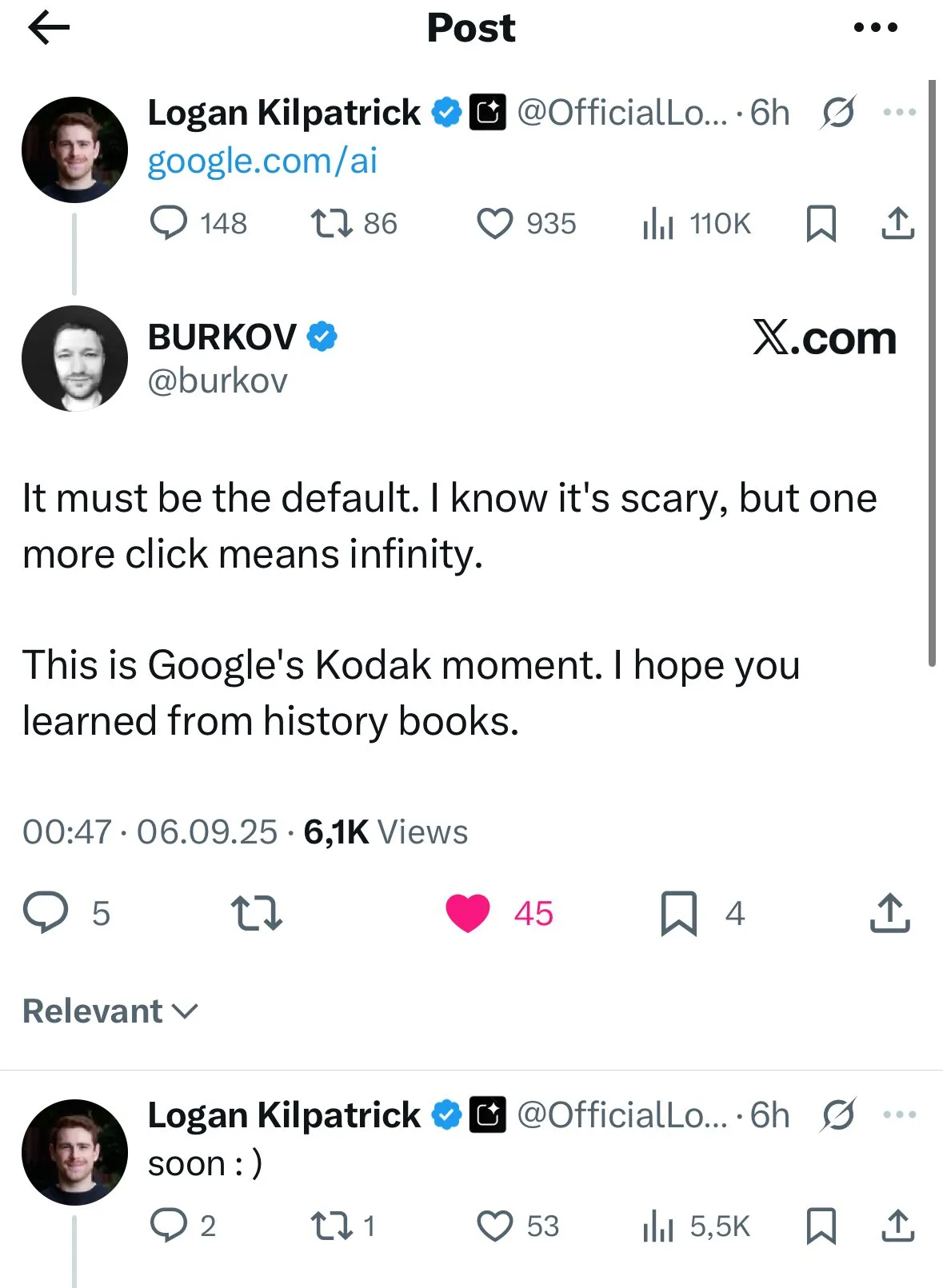
But SERP evolution went even further than the SERP itself. Search now happens everywhere: TikTok, ChatGPT, YouTube, Perplexity, Reddit. The SERP didn’t just evolve. It fragmented across platforms entirely.
This is exactly why we rebranded what we do at Snippet Digital as “Search Journey Optimisation” rather than traditional SEO. The search journey doesn’t start and end on Google anymore. It starts wherever the user is: a Reddit thread, a TikTok video, a ChatGPT conversation, a YouTube tutorial. Optimising for one SERP is no longer enough. You need to optimise for the entire journey across every platform where your audience searches.
.BIqrElY6_T2lAS.webp)
Score: 9/10. The prediction was about SERP evolution. The reality was SERP fragmentation. Same instinct, bigger outcome.
10. “SEOs need to move beyond links and traditional search”
“Without investment in technical strategy or willingness to learn about entities or semantic connectivity, no SEO campaign can reach its full potential.”
Verdict: Right.
This was the closing argument, and six years later, the industry is living it. Links still matter, but entities, topical authority, and structured data are increasingly what determines visibility, especially in AI search.
The agencies and practitioners who followed this advice are the ones adapting to AI Overviews, AI Mode, and LLM citations. The ones who stayed link-focused are the ones writing panicked LinkedIn posts about traffic drops.
Score: 8/10. Directionally correct. The urgency was understated.
The final scorecard
| # | Prediction | Score |
|---|---|---|
| 1 | AI will dominate SEO | 9/10 |
| 2 | Voice search is here to stay | 2/10 |
| 3 | Entities will become central | 9/10 |
| 4 | Knowledge Panels matter | 8/10 |
| 5 | Google Discover will grow | 9/10 |
| 6 | Visual search will transform | 8/10 |
| 7 | E-A-T matters | 5/10 |
| 8 | Topics over keywords | 9/10 |
| 9 | SERPs will evolve | 9/10 |
| 10 | Move beyond links | 8/10 |
| Average | 7.6/10 |
Seven out of ten landed solidly. One was a spectacular miss. One was half right, half betrayed by Google’s own updates. And the biggest story, the rise of AI as a search platform, was something I pointed at without having any idea how big it would get.
What nobody predicted
The most interesting part of revisiting old predictions isn’t what you got right or wrong. It’s the things that weren’t on anyone’s radar.
Nobody in 2020 was talking about:
AI as a search engine
ChatGPT launched in November 2022. Within months, people were using it to answer questions they’d previously Googled. Perplexity built an entire search engine around LLMs. Google scrambled to add AI Overviews/AI Mode. The entire search paradigm shifted.
Reddit becoming a search powerhouse
In February 2024, Reddit signed a $60 million per year data licensing deal with Google, giving Google access to Reddit’s content firehose for AI training. A similar deal with OpenAI followed months later. What happened next was staggering. Reddit’s organic visibility roughly quadrupled. Estimated organic traffic from Google went from around 130 million monthly visits in early 2024 to over 800 million by late 2024. Reddit threads now rank in the top 10 for an enormous range of queries, from product recommendations to technical troubleshooting to YMYL topics. Google even added a dedicated Forums filter to search, which overwhelmingly surfaces Reddit content.
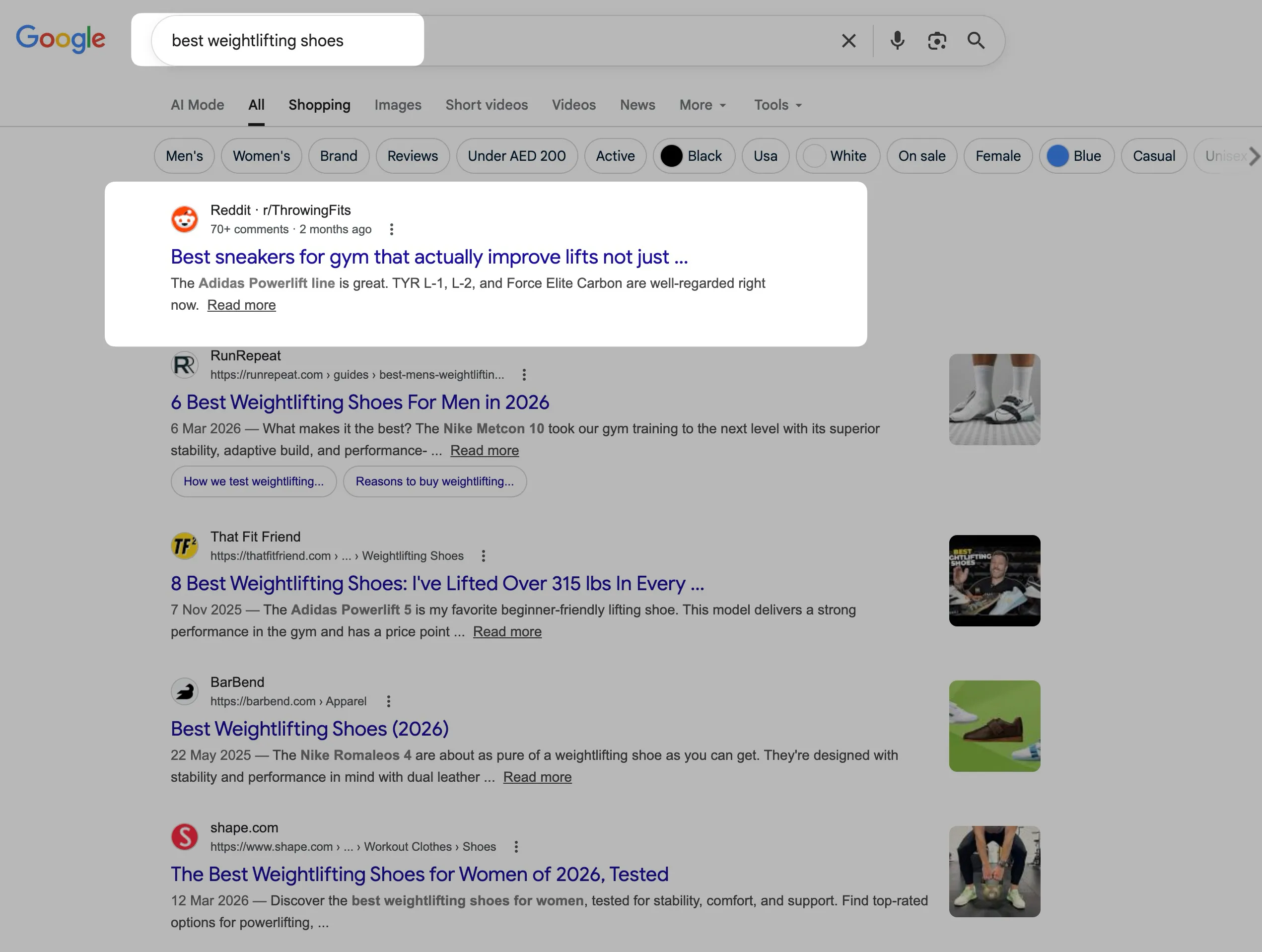
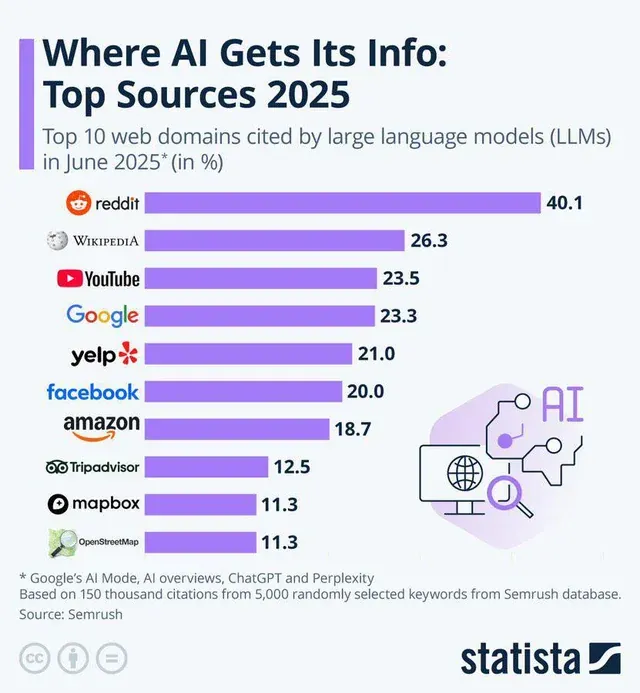
But it goes beyond traditional search. Reddit threads are now one of the most cited sources across AI models. ChatGPT, Perplexity, and Google’s AI Overviews all pull heavily from Reddit when they need human opinion or real world experience. Reddit went from “that site people append to their Google searches” to a fundamental layer of how both search engines and LLMs understand what real people think.
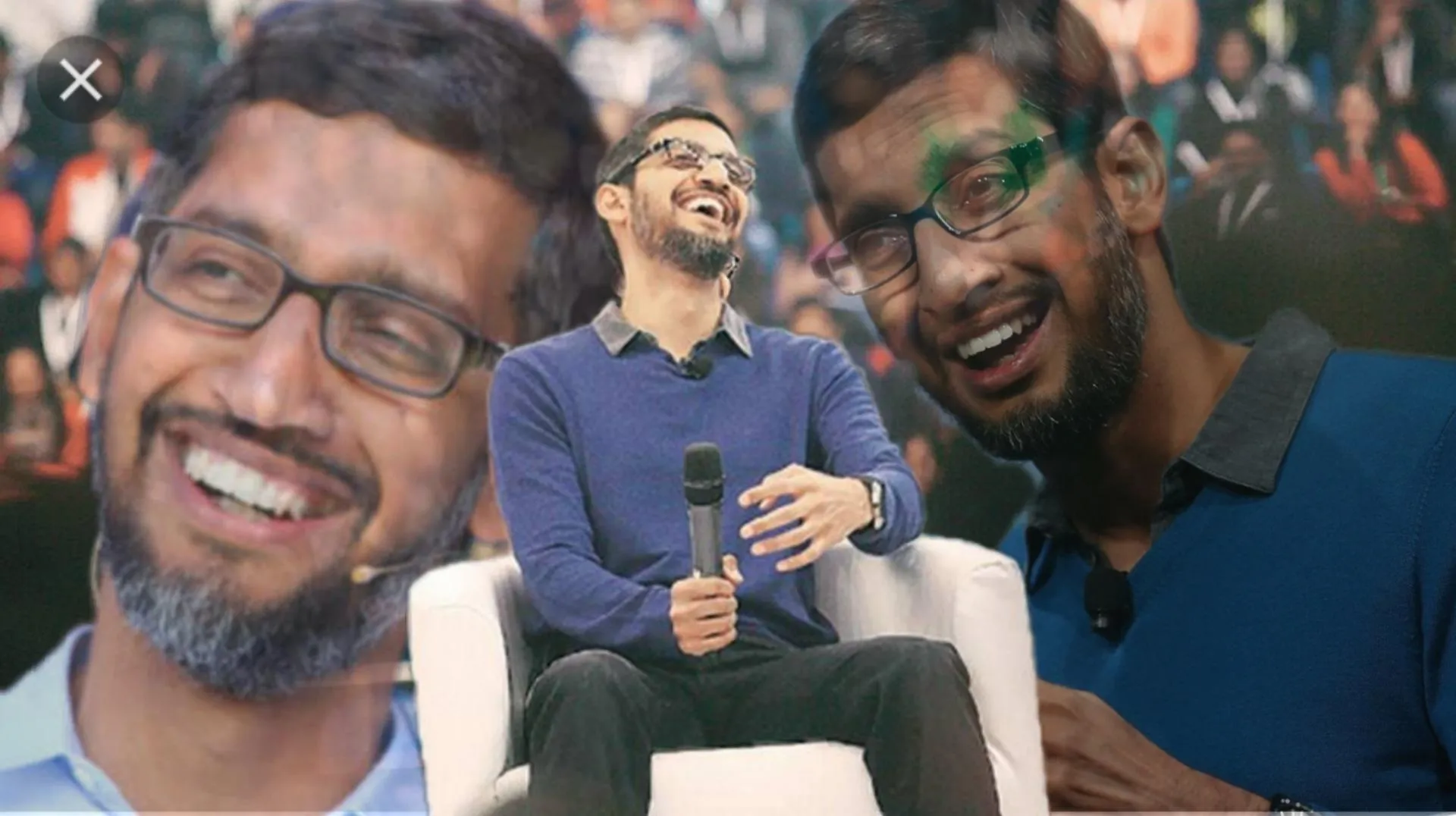
The irony is brutal. While Google’s Helpful Content Update devastated independent publishers with genuine expertise, user-generated Reddit threads (often low effort, sometimes inaccurate/spammy) were simultaneously boosted to the top of results. Whether the ranking gains are connected to the $60M deal or not, the timing is hard to ignore.
For brands, this changes the playbook entirely. Reddit isn’t optional anymore. It’s where your audience is searching, where LLMs are pulling citations from, and where Google is sending traffic. If your brand doesn’t have a genuine presence in relevant subreddits, you’re invisible in an increasingly important channel. It’s one of the reasons we built a dedicated Reddit marketing practice at Snippet Digital. The brands getting ahead are the ones treating Reddit as a serious search channel, not an afterthought.
MCP and AI agents
The Model Context Protocol didn’t exist. The idea that AI agents would interact with websites, call APIs, and complete tasks autonomously was science fiction. Now I’m building MCP servers that let Claude talk directly to Google Search Console.
The content apocalypse
Google’s Helpful Content Update destroyed legitimate sites alongside spam. The promise of “create quality content and you’ll be rewarded” collapsed. Sites with decades of expertise lost everything overnight.
Search happening everywhere
TikTok became a search engine. YouTube became the second largest search engine by usage. The idea that SEO meant “optimise for Google” became dangerously narrow.
Vibe coding
AI writing entire applications from prompts. Not just content, but tools, websites, dashboards. The barrier between “having an idea” and “having a working product” collapsed.
If I were writing this article today for 2030, I’d say: the biggest changes will be the ones we can’t see yet. The best preparation isn’t predicting specific technologies. It’s building the muscle to adapt when they arrive.
That’s the real lesson from this scorecard. Not that I got 7.6 out of 10. But that the 2.4 I missed and the things not on the list at all were bigger than everything I got right combined.
You might also like
Stay in the loop
I'll email you when I publish something new. No spam. No fluff.
Join other readers. Unsubscribe anytime.

Entrepreneur & Search Journey Optimisation Consultant. Co-founder of Keyword Insights and Snippet Digital.