Preferred Sources just arrived in AI Mode. I added the button the same day.
5 views
Releases
I added Google’s official “Add as a preferred source” button to the bottom of every blog post on this site on 27 May. Same day, Google rolled Preferred Sources into AI Mode and AI Overviews. Barry Schwartz wrote it up at Search Engine Roundtable and Search Engine Land has the full breakdown.
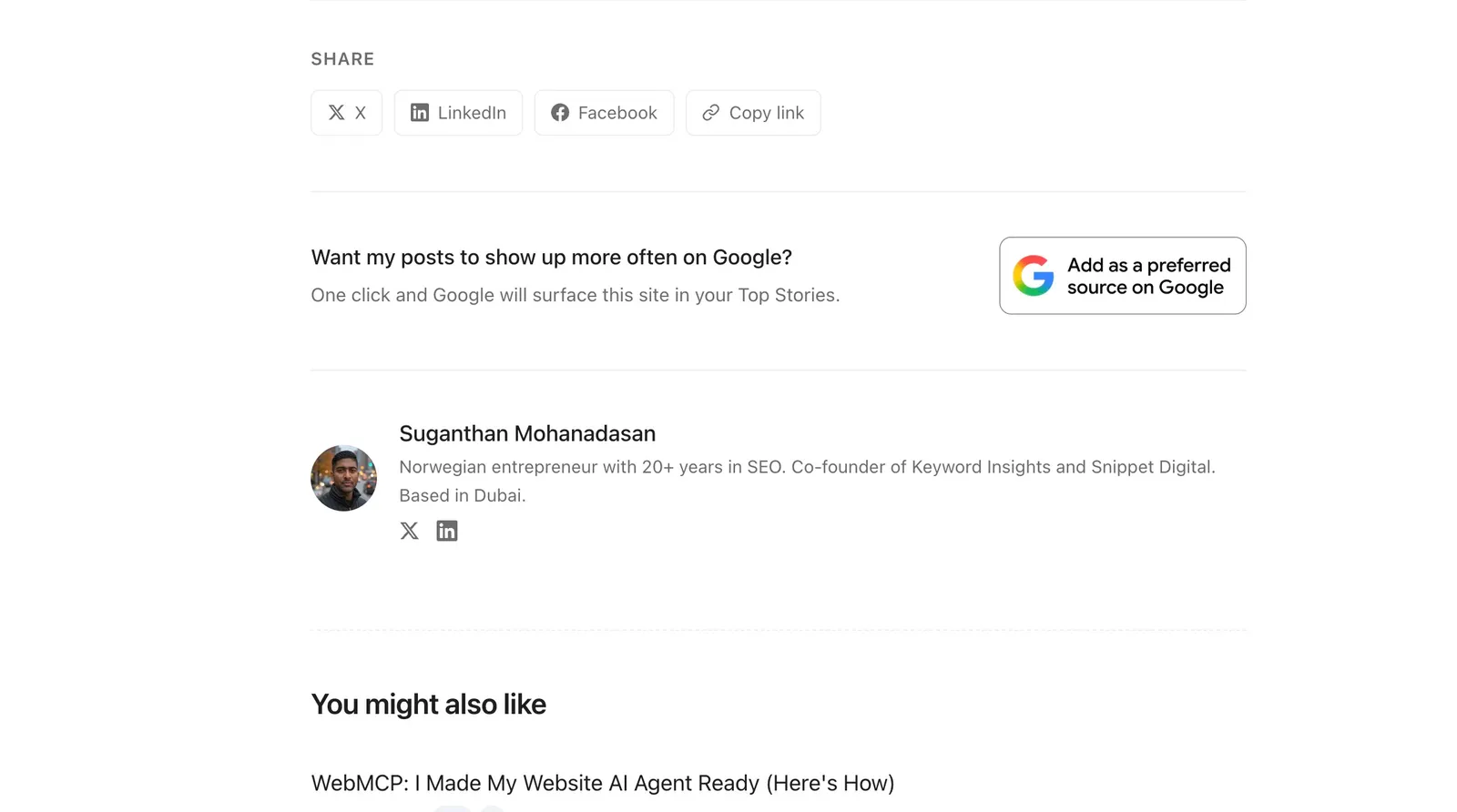
When I shipped the button, the feature was scoped to the standard SERP Top Stories carousel and the “From your sources” rail. That alone made it worth doing for content sites since users who mark your domain as preferred get a 2x click-through lift on those surfaces per Google’s own data. The AI Mode extension changes the maths. Top Stories has a finite audience. AI Mode passed 1 billion monthly active users in May 2026. Anyone who marks your site as preferred now sees you featured directly inside their AI-generated answers, with a label that says exactly why.
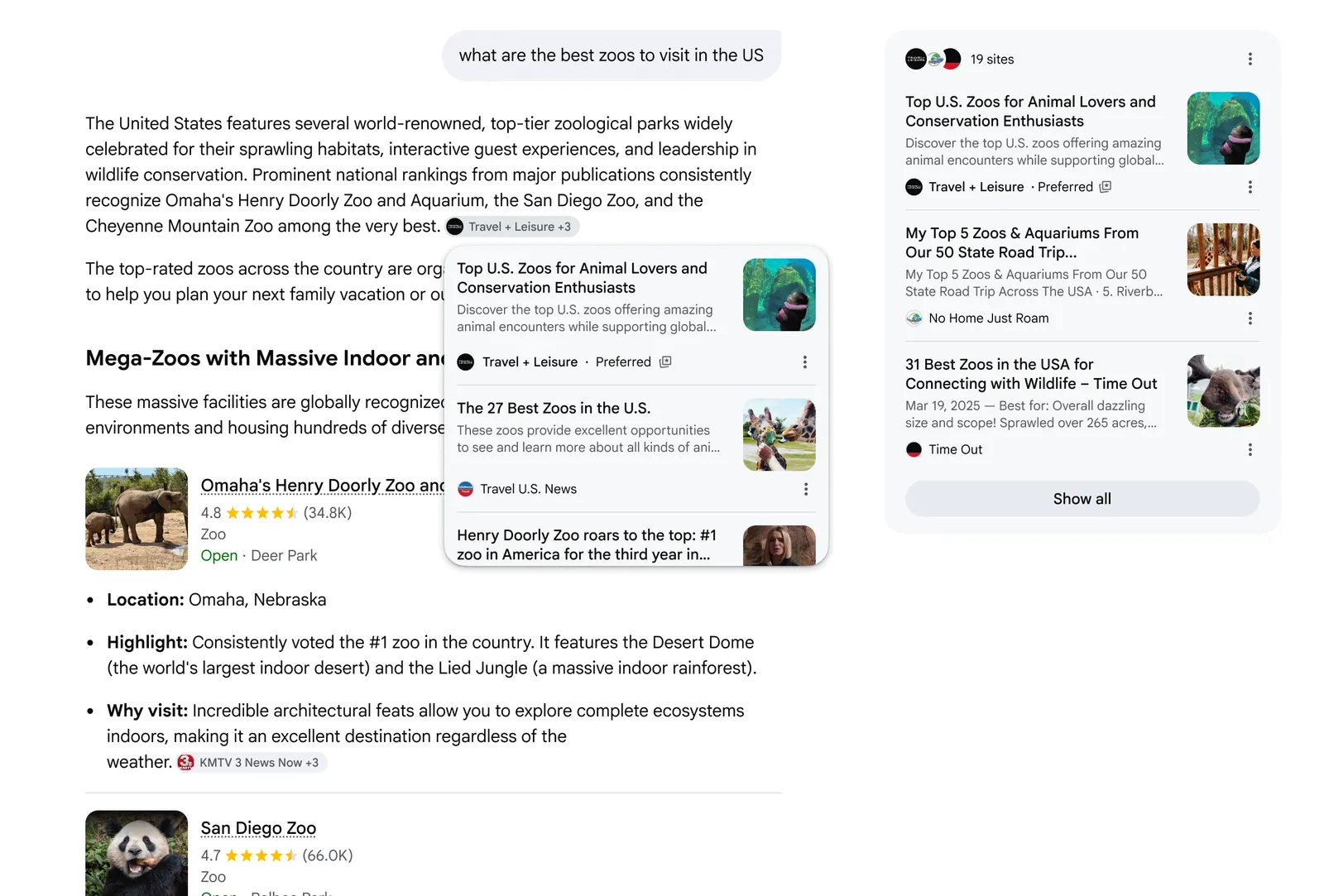
Google said 345,000 unique sources have already been marked as preferred by users. That is a real number for a feature that ships behind 2 clicks. Whatever the AI Overview and AI Mode citation behaviour looks like in practice, a meaningful share of search users have already opted into telling Google which sources they trust. Publishers who put the button in front of that audience earlier come out ahead.
The mechanics are the same as before. Domain or subdomain only, no subdirectory targeting. The deeplink format is the same https://google.com/preferences/source?q=yourdomain.com URL Google has been using since the global rollout in April 2026. Point the button there and let Google’s UI handle the rest.
If your audience reaches you through search and you have a blog, the button is a 10 minute job and the audience now extends across regular Search, Top Stories, the “From your sources” rail, AI Overviews, and AI Mode. Hard to think of a higher ROI piece of front-end work right now.
The implementation walkthrough is in the agent-ready post. The breakdown of which Google AI surfaces use which signals is in The Three Lives of Schema Markup.